






Neighborhood Destinations
Howard Beach
In a city defined by iconic skylines and ever-shifting neighborhoods, Howard Beach in southwestern Queens stands as a singular place where New York’s restless energy meets the calm of its waterfront. Founded in 1897 by William J. Howard, this coastal community was once known as the “Venice of Long Island” for its estuary-laced landscape and remains anchored in a strong sense of place and identity.
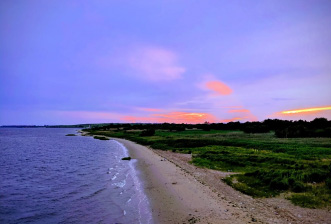
Perched between Jamaica Bay and the Belt Parkway, Howard Beach’s charm springs from its unique blend of suburban calm and urban convenience. With a population around 30,000, it encompasses distinct enclaves such as Old Howard Beach, Rockwood Park, Lindenwood, and Hamilton Beach—each with its own architectural vernacular and history.
Much of the residential fabric dates back to the early- and mid-20th century: Cape Cod-style homes from the post-World War II boom mingle with ranches, Tudors, and a sprinkling of more recent residences. In Rockwood Park, marshland filled after the war gave way to single-family houses and later, larger homes that signal the neighborhood’s steady appeal.
Today’s real-estate scene reflects Howard Beach’s desirability. Single-family homes typically sell in the approximate range of $500,000 to $1.5 million, while two-family houses and co-ops can command strong prices in a market marked by limited inventory. Condominiums, a staple of the Lindenwood area, are often priced starting in the mid-$200,000s up to the high-$300,000s for larger units. Rental options likewise remain competitive, with average monthly figures aligning with other sought-after Queens enclaves.
Central to everyday life is Cross Bay Boulevard, a vibrant commercial spine where longtime favorites and neighborhood institutions anchor the community. Italian-American staples such as Bruno’s Restaurant and Lenny’s Clam Bar sit alongside newer destinations like Vetro Restaurant & Lounge and Divino Pizzeria, giving the boulevard a richly layered culinary identity.
PJ Marcel, liaison for the Howard Beach Dads Facebook group, stated, “Howard Beach remains one of the last generational Italian American communities that values friendship and respect. Visiting the area feels like stepping back in time, with its waterfront cottages and elegant mansions. Its proximity to JFK and access to train and bus lines make it especially convenient.”
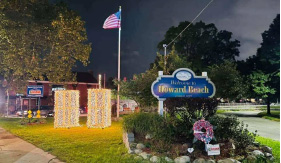
Resilience is part of the Howard Beach story too. Following the flooding of more than 2,000 homes during Hurricane Sandy in 2012, neighbors rallied together, strengthening bonds that remain evident in seasonal celebrations and community gatherings. The result is a neighborhood that feels both timeless and alive—a place where history, homes, and heartfelt community converge.
Howard Beach’s legacy is further enriched by the notable figures who have called it home. In the mid-20th century, folk music icon Woody Guthrie lived in the neighborhood with his family while battling Huntington’s disease, composing and recording music that would later influence generations of artists and activists. His time in Howard Beach added a quiet but meaningful artistic thread to the area’s cultural fabric.
The neighborhood has also produced and attracted figures across entertainment, sports, and popular culture. Rock legend Joey Ramone, frontman of the Ramones and a founding force of punk rock, spent part of his youth in the area, contributing to Howard Beach’s unexpected connection to New York’s downtown music revolution. Tennis star Vitas Gerulaitis, once ranked among the world’s elite and a fixture of the international tennis circuit, also hailed from the neighborhood.
In television and film, actor Rick Hearst, known for his long-running roles in daytime television, is among Howard Beach’s notable alumni. Singer Pia Toscano, who rose to national attention as a finalist on American Idol, represents a newer generation of performers shaped by the community’s strong family roots.
Taken together, these residents reflect the layered identity of Howard Beach: a place grounded in family and tradition, yet quietly intertwined with the arts, athletics, and cultural history of the city. It is this blend—ordinary and extraordinary—that continues to give the neighborhood its enduring character.