



Cannes Film Festival
The 79th Festival de Cannes will take place from the 12th to 23rd May 2026 in and around the Palais des Festivals, on La Croisette, the city’s broad tree-lined seafront boulevard. Better known to Americans as the Cannes Film Festival, it is one of the most prestigious movie industry events in the world.
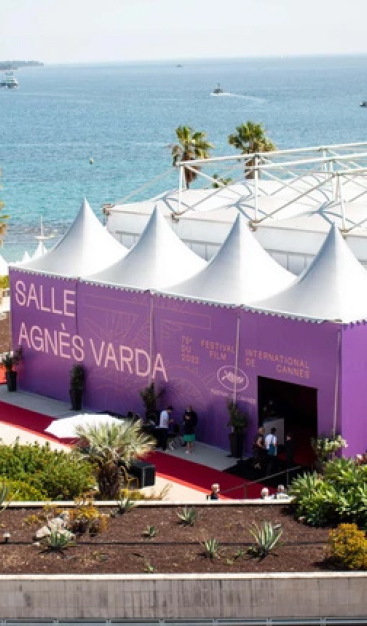
Starlets and stars pose for photographers on the impressive red carpet leading up the 24 stairs that front The Palais; celebrities appear in the grand hotels that line La Croisette, on exclusive restaurant rooftops and on board an international array of mega-yachts that stud the scenic Mediterranean harbor. As a professional occasion, the festival showcases multiple genres of films from dozens of countries; “head-hunters” search worldwide to find the most promising directors and support fledgling talent. More than 4000 journalists representing some 1800 media organizations from nearly 90 countries widely publicize its glamour.
The much-coveted Palme d’Or, the highest award at the Cannes Film Festival, honors the winning film and is presented to its director. Among the other top markers of excellence, actors are recognized with The Best Actor award; the Grand Prix, the Jury Prize; there’s the Honorary Palme and the Caméra d’Or, which awards the best début film across all categories. Plus, there’s the Short Films Competition and a group of initiatives considered under the name Cinéma de Demain (film of tomorrow).
Not every film is eligible for an award. Out of Competition films show projects that have a big impact on the cinematic calendar; Cannes Première features silver-screen legends and Cannes Classics shine a light on restored copies of old favorites and recognize film-themed documentaries. Since 2018, when “Three Days in Cannes” was launched, thousands of young people aged between 18 and 28 flock to the beginning and end of the festival to discover films from the Official Selection. Plus, there are masterclasses, tributes, exhibitions, training courses, initiation workshops, youth programs and “Rendez-vous with” sessions with film icons. Special Screenings and Midnight Screenings add to long, event-filled days.
The film festival does more than shape cinematic discourse, it proactively supports environmental efforts and has championed global issues since its inception. In fact, the festival was launched for a noble purpose: to free film-making from all political influence in a “spirit of friendship and universal cooperation” and as a reaction to the fascist influence at the Venice Mostra Film Festival, in 1938, when Hitler awarded the Mussolini Cup to a propaganda film

In response, French diplomat Philippe Erlanger initiated an an international event as an impartial alternative that honors artistic cinema. His group chose the Municipal Casino in Cannes and Louis Lumière, the father of cinematography, as honorary president. The occasion, which was scheduled for September 1, 1939, the very date Germany invaded Poland, was cancelled due to World War II, a devastating era on The Riviera. (Locals were deported, some died of starvation, and after the Liberation of France in 1944, others were wrongly accused of collaborating with Nazi occupiers—including Emmanuel Martinez, the founder of the Hôtel Martinez in Cannes.)
The first festival eventually took place September 20 to October 5, 1946, in Cannes, after the war. In 1959, the Marché du Film was launched during the festival; it has become the largest film market in the world and integral to the festival’s prominence in the cinematic sphere. In 2026, the marketplace expects 15000 buyers, directors, distributors, financiers, producers and promoters to gather privately and at some 250 events, to make deals to acquire, finance, preview, sell and promote as many as 4000 films and projects from 140 countries.
Today, the festival is a cultural and economic phenomenon on the Cote d’Azur. Le beau monde, the jet set, the international elite, the models, magnates and moneyed folks and their entourages assemble in Cannes, where the joie de vivre spirit thrives. The privileged vie with the celebrity glitterati to stay in leased Art Deco villas or in the Grand Dame Belle Epoque hotels, including The Carlton Cannes, A Regent Hotel; The Majestic Barriere and The Martinez. They shop at the adjacent fashionable boutiques, such as Chanel, Dior, Prada and Vuitton; sip champagne on lawn chairs fronting The Mondrian and dine on adjacent beachfront terraces, at sidewalk cafés, in hillside eateries and at rooftop restaurants atop Five Seas Hotel and the JW Marriott, on La Croisette, which hosts a culinary pop-up, which I attended in May, 2025. Dubbed: La Terrasse by Albane, it’s a festival-long collaboration between Albane Cleret, the “highest profile party planner in France,” and Michelin three-star chef, Mauro Cologreco, from Mirazur in Menton.
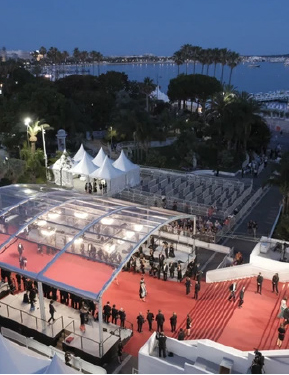
Down-to-earth visitors join distinguished guests during the 12-day happening. The public is welcome at Cinéma de la Plage, open-air screenings that present a different film nightly and concerts. And, the residential small city offers a plethora of walkable pleasures: two daily markets, real-world prices at Gant, Zara, and Sephora on rue d’Antibes, exhibits at the Napoleonic era Malmaison Art Center, mom and pop cafés on side streets, and fast-food kiosks along the wide beachfront promenade where crèpes and jambon-beurre (ham and cheese on a baguette) cost a fraction of the menu items listed at the haute beachfront terrace cafes, just footsteps from them.
What’s more, the architecture-enhanced destination is steeped in history. The Old Port, adjacent to the Palais, is just a few footsteps from the pedestrian-only, cobblestone streets lined with medieval buildings on the adjacent sloping hillsides of the former fishing village, Suquet, in Old Town. (Among the teeny cafés, my favorite is Le Maschou.) Nearby, near City Hall, rue du Bivouac Napoleon reveals history from 1815, when the general, who landed six miles away at Golfe-Juan after escaping from Elba, spent the first night of his Hundred Day journey to Paris. In 1865, Notre Dame de Bon Voyage or Our Lady of the Good Voyage church was constructed on that land.
Cannes is located 40 miles west of Nice; the highspeed TGV train connects it with Paris in about five hours; regional trains and public buses link it with Cote d’Azur locales, and the small bus that circumnavigates the city costs one Euro. Multiple daily, year-round ferries shuttle to Sainte-Marguerite and Saint-Honorat, in the magically natural Lérins Islands, in 20 minutes and seasonal ferries link St. Tropez in 75 minutes. The small city, the “Sister City” to Beverly Hills, is a magnet worth visiting at any time of year.