





A Life in Motion
Donna Rubin’s Journey from Ballet and Broadway
to Wellness and Hamptons Cabaret
Professional dancer, Broadway performer, yoga pioneer, entrepreneur and producer Donna Rubin has built a career around movement, creativity and human connection. Today, as co-producer of Hamptons Summer Songbook by the Sea, she is bringing acclaimed cabaret artists to an intimate East End stage—and continuing a lifelong mission to create experiences that bring people together.
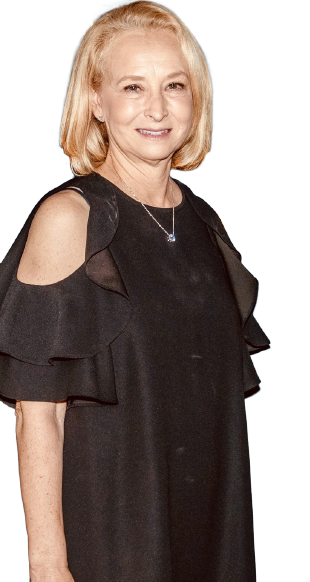
On a summer evening in Wainscott, the lights inside LTV Studios begin to dim as conversations soften around café tables and a pianist settles behind a gleaming baby grand. The audience has gathered to hear Broadway stars and celebrated cabaret performers, but before the first note is sung, another performance has already taken place—one carefully choreographed behind the scenes.
Making certain every detail has fallen into place is Donna Rubin, co-producer of Hamptons Summer Songbook by the Sea, a seasonal cabaret series that has become one of the East End’s most distinctive cultural experiences.
The role appears perfectly natural today, although many audience members may not realize that Rubin has already lived several remarkable professional lives. She has been a classical dancer, a Broadway performer, a pioneering yoga entrepreneur, a teacher and mentor, a documentary producer and now a champion of live performance in the Hamptons.
Looking back, those careers seem less like separate chapters than one continuous story told through different mediums. Dance led to Broadway, Broadway to entrepreneurship, entrepreneurship to wellness and wellness eventually circled back to the performing arts. Through every evolution, one belief has remained constant: the most meaningful experiences are those that inspire connection.
That philosophy began taking shape in Canada, where Rubin discovered dance at an early age. Her talent earned her admission to the prestigious National Ballet School, an institution known for training generations of internationally respected performers.
Life at the school required extraordinary discipline. Each day combined demanding academics, technical instruction and hours of rehearsal. The lessons extended well beyond dance, teaching Rubin the value of preparation, perseverance and trusting a process whose rewards might not be immediately visible.
Those formative years later inspired her to produce the award-winning documentary An Improbable Dream, which explored the influence the National Ballet School had on the future lives and careers of Rubin and her former classmates.
Professional opportunities soon followed. Rubin danced with the National Ballet of Canada before joining the original Canadian company of The Phantom of the Opera, performing the principal role of Meg Giry.
Broadway beckoned next. She made her Broadway debut in the acclaimed Lincoln Center revival of Rodgers and Hammerstein’s Carousel, performing in the production while also serving as assistant dance captain.
Her years in the theatre offered much more than time beneath the spotlight. Rubin learned how exceptional productions are built through collaboration, preparation and trust. Every performance depended upon dozens of people working in harmony, each contributing something essential to the final result.
She would later discover that the same principles applied equally well to teaching, business and producing live events.
Rather than remaining exclusively within the performing arts, Rubin eventually chose an unexpected new direction. At a time when yoga occupied only a small corner of New York City’s fitness landscape, she recognized possibilities that others had yet to see.

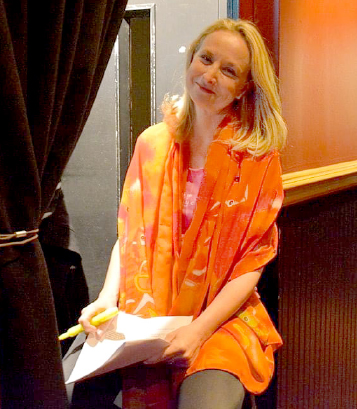
Rubin viewed yoga as more than physical exercise. She saw a discipline capable of helping people build healthier lives while creating strong, supportive communities.
What appeared from the outside to be a dramatic career change was, in many ways, a natural progression. Instead of performing for audiences, Rubin became a trusted teacher to Broadway dancers, actors, writers, directors and producers, continuing to contribute to New York’s artistic community in a different but equally meaningful way.
In 1999, she co-founded bodē NYC, originally known as Bikram Yoga NYC, and opened New York’s first dedicated hot yoga studio.
Rubin helped pioneer what would become known as the boutique fitness model. By offering the same hot-yoga class every hour, she made the experience accessible and predictable for New Yorkers. A single Midtown studio eventually grew to four locations, introducing thousands of people to a practice that would become part of mainstream wellness culture.
Her influence extended beyond running the studios. Rubin became one of the first trained judges for the USA Yoga Regional Asana Championship Series, led classes during the Summer Solstice yoga events in Times Square and mentored nearly 1,000 teachers.
Although classical dance and yoga may appear to occupy different worlds, Rubin sees them as complementary pursuits. Both require discipline, patience and presence. Both ask participants to listen, trust the process and understand that lasting growth occurs gradually.
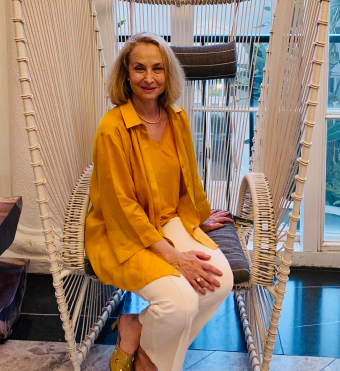
Most importantly, both create communities built around shared experience rather than individual achievement.
That appreciation for connection eventually led Rubin back to the performing arts.
After selling her yoga business and moving full time to Bridgehampton, she began thinking about the vibrant cabaret scene she had come to love in Manhattan. The Hamptons offered galleries, theatres and concert venues, but there was no dedicated home for the intimate style of performance in which artists tell stories as much as they sing songs.
At approximately the same time, Josh Gladstone had arrived at LTV Studios as creative director with a similar vision. Their partnership became the foundation for Hamptons Summer Songbook by the Sea.
Now in its third season, the series has become an addition to the Hamptons cultural calendar. Produced by Rubin and Gladstone, it brings Broadway and cabaret artists into LTV’s reconfigured television studio, where lighting and sound meet café tables, modular staging and a baby grand piano.
Audiences experience the Great American Songbook only a few feet from performers interpreting music by Berlin, Porter, the Gershwins, Sondheim, Bernstein and contemporary songwriters. Conversation before and after each show encourages interaction rarely possible in a larger venue.
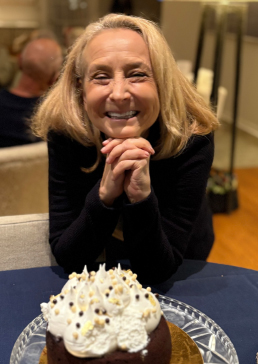
For Rubin, That Intimacy Defines Great Cabaret.
Unlike conventional theatre, where a production may be repeated with precision night after night, cabaret allows performers to respond to the people in the room. Stories shift, spontaneous exchanges emerge and familiar songs can acquire new meaning through the energy of an evening.
It is precisely that sense of authenticity Rubin hoped Hamptons audiences would embrace.
The success of Hamptons Summer Songbook suggests they have. Each season has expanded the roster of artists while introducing new audiences to an intimate form that remains one of New York’s cultural treasures.
Rubin, however, measures success by more than attendance or applause. She watches what happens after the final encore, when performers remain to meet guests and conversations continue long after the formal program has ended.
Those moments transform an evening of entertainment into a genuine community experience.
Seen through that lens, Rubin’s career no longer resembles a succession of reinventions. Instead, it represents the steady evolution of one defining purpose.
The young dancer who learned discipline at Canada’s National Ballet School, the Broadway performer who embraced collaboration, the entrepreneur who helped introduce hot yoga to New York and the producer now championing live performance have all been working toward the same goal: creating environments in which people feel inspired, connected and fully present.
Some careers are defined by a single profession. Donna Rubin’s has been defined by a purpose.
Whether through movement, mindfulness or music, she has spent a lifetime bringing people together—and demonstrating that the most meaningful performances are not always those presented beneath the brightest lights, but those that leave people feeling a little more connected when they return home.