





Yogmata Keiko Aikawa
Finding Stillness In The City That Never Sleeps
Himalayan meditation master Yogmata Keiko Aikawa is bringing an ancient philosophy of inner peace to New York, and a new book will take her message even further in 2027.
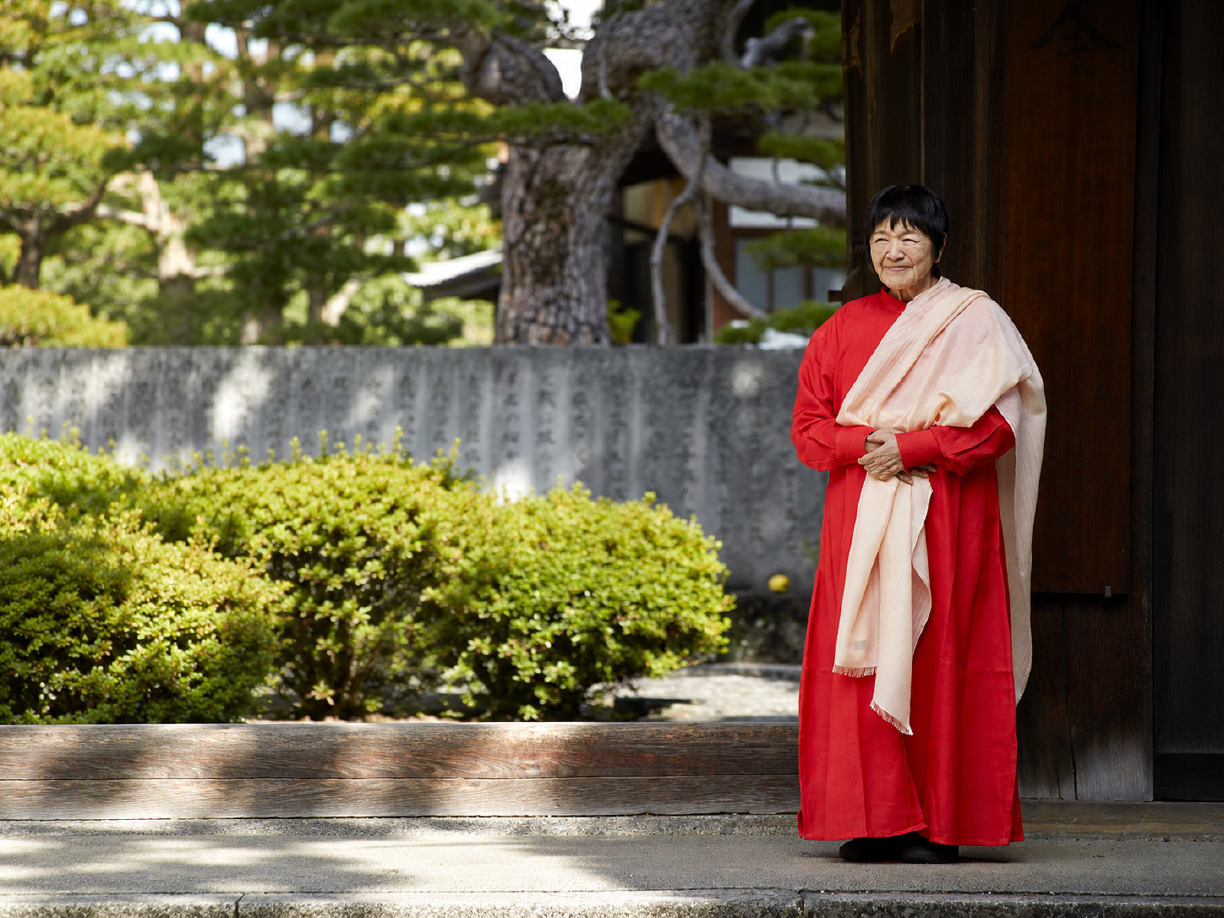
There may be few places on Earth that appear less naturally suited to stillness than New York City.
The traffic never quite disappears. Phones vibrate, screens glow, meetings overlap and millions of people negotiate their way through crowded streets and subway platforms in a city seemingly powered by perpetual motion. Yet it is here, amid the noise and urgency, that Japanese meditation master Yogmata Keiko Aikawa has increasingly chosen to share a very different proposition: that peace does not require escaping the modern world. It begins by traveling inward.
For Yogmata, New York has become an important stage in a spiritual journey that began thousands of miles away and decades ago, ultimately taking her deep into the Himalayas and an ancient tradition that teaches meditation not simply as a wellness practice, but as a pathway toward greater awareness.
Over successive visits, she has brought those teachings into some distinctly New York settings.
She has conducted workshops at the University Club and Japan Society, addressed gatherings connected with the United Nations and, in 2025, established a dedicated private meditation dojo in Manhattan. The contrast is part of what makes her presence here intriguing.
In an era when meditation has migrated from monasteries into smartphone apps, corporate wellness programs and mainstream medicine, Yogmata embodies a science of transformation—one that integrates modern scientific thinking and psychology while drawing on ancient wisdom to reach into realms that science cannot yet explain. Rooted in the Himalayan Siddha tradition, her teachings place samadhi—a deep meditative state in which the ordinary distinction between the self and a greater consciousness is said to dissolve—at the heart of the path to enlightenment.
Yogmata’s own journey began in Yamanashi, Japan, where she was born. As a teenager, she became interested in meditation, yoga, natural remedies and approaches to health. By her 20s, she was teaching yoga, eventually instructing thousands of students. Her search did not end with the physical practice of yoga, however. It led her through Tibet, China and India and eventually into the Himalayas.
There, after meeting the Indian yoga and meditation master Pilot Baba, she undertook intensive spiritual training and became a disciple of the Himalayan saint Hari Baba. That training took place at altitudes above 5,000 meters and ultimately led to her attainment of Samadhi. Beginning in 1991, she undertook 18 public Samadhis in India, events regarded within her tradition as demonstrations of spiritual attainment.
She is the first woman ever to become a Himalayan Siddha Master. In 2007, Juna Akhara, India’s largest and oldest Hindu monastic order, conferred on her the title of Mahamandaleshwari, meaning “master of the universe,” making her the first woman to receive this honor. In 2026, she was further elevated to the even higher title of Peethadhishwar, meaning “pure being.”
Yet the Yogmata encountered by New Yorkers is not removed from contemporary life. Her message increasingly addresses people living directly in its pressure.
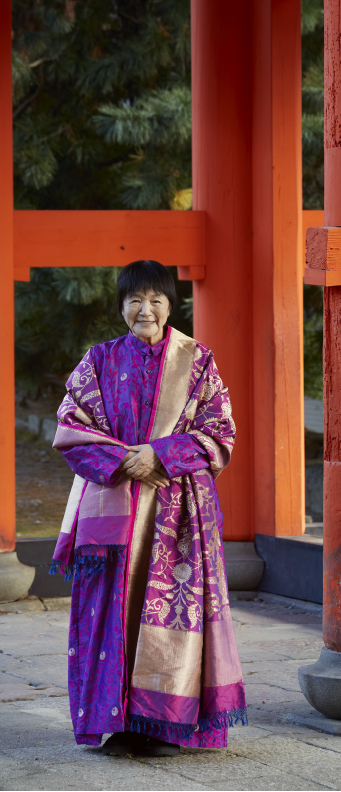
At a University Club workshop in 2024, participants gathered to hear Himalayan teachings applied to subjects including stress, well-being and longevity. Later that year, another workshop at Japan Society again focused on managing mental stress through meditation.
That translation, from Himalayan ascetic tradition to everyday urban existence, is central to understanding Yogmata’s expanding presence in New York.
Her philosophy begins with the idea that human beings spend enormous amounts of energy responding to the external world and to the constant activity of their own minds. Meditation, in her teaching, is a way of moving beyond that noise, releasing attachments and returning attention to what she describes as one’s essential self.
It is a message that can sound almost purpose-built for contemporary New York, where professional ambition and constant stimulation coexist with an enormous appetite for wellness, mindfulness and ways of disconnecting from technology.
But Yogmata’s approach differs from meditation packaged simply as relaxation. The objective within her tradition is transformation rather than merely stress reduction. The stillness is a beginning, not an end.
Her New York story has also increasingly extended beyond individual well-being to her broader theme of peace.
In 2016, Yogmata appeared as a guest of honor during International Day of Yoga activities at United Nations headquarters. She returned for peace events at the U.N. later in 2016 and in 2017 and participated again in International Yoga Day celebrations there in 2023. She has appeared at U.N. headquarters a total of six times for speeches and yoga or meditation guidance.
(Oct. 2025 WEDO event, Dec. 2025 World Meditation Day event, June 2026 International Yoga Day event)
Her 2025 visit brought the strands together particularly clearly. Yogmata spent a week in New York participating in cultural and philanthropic events, conducting a workshop at the Japanese American Association and opening her Manhattan meditation space. The visit culminated at a Women Empowerment & Development Organization summit at the United Nations, where she led a moment of silence for global peace.
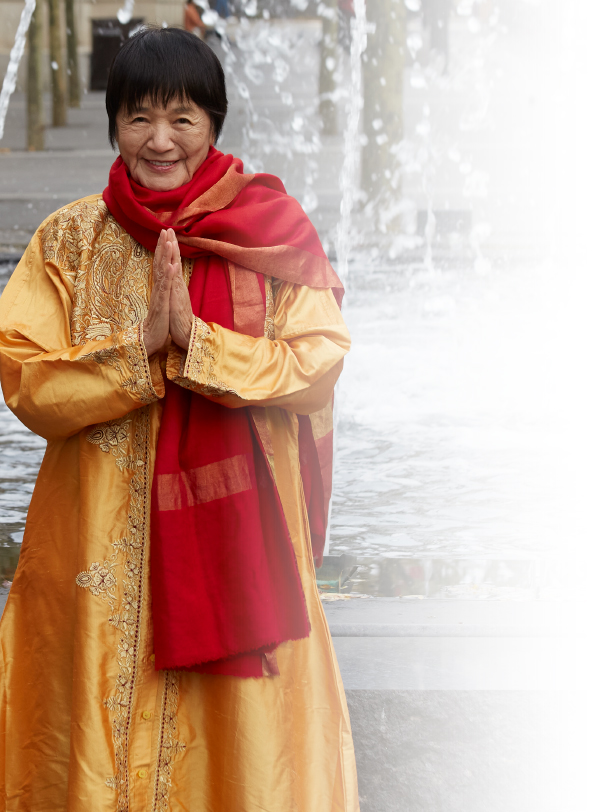
The underlying idea is deceptively simple: peaceful societies, in Yogmata’s philosophy, ultimately depend upon peaceful individuals.
That may be an ambitious proposition in an anxious and divided world, but it explains why her teachings move repeatedly between the personal and the global. Meditation becomes more than an individual retreat from conflict; it becomes, in her worldview, one small way of changing the conditions from which conflict emerges.
And in 2027, that philosophy will acquire a new vehicle for reaching audiences far beyond the rooms where Yogmata personally teaches.
Rizzoli Universe will publish Gateways to Nirvana: Meditations from a Himalayan Master on March 16, 2027, a 192-page volume combining Yogmata’s teachings with meditative poetry, guided practices and photography by Mark Roskams. Denise Scotto, founding chair of the International Day of Yoga Committee at the United Nations, contributes the foreword.
The book feels particularly connected to the philosophy Yogmata has been bringing to New York because it makes the spiritual tangible.
Rather than beginning with an abstract concept of enlightenment, Gateways to Nirvana considers four familiar elements as gateways to deeper meditation: water, flowers, landscape and temples. Water becomes associated with calming emotion; flowers with purity and perfection; landscape with the rhythms of the universe; and temples with spaces for contemplation. Later sections explore chakras and the relationship between food, nourishment and spiritual practice.
In that sense, the book provides an accessible entrance into a tradition that might otherwise seem impossibly distant from everyday Western experience. One does not have to begin on a Himalayan mountaintop. The invitation is to notice what is already around us differently.
It also marks another chapter in Yogmata’s long career as an author. Her books have sold more than 1 million copies, primarily reaching audiences in Japan and Asia. Gateways to Nirvana, published by New York-based Rizzoli, has the potential to introduce her work to a considerably broader English-language readership.
And perhaps there is something fitting about New York becoming one of the places where that journey unfolds.
The city has always been a meeting point: East and West, ancient traditions and new ideas, spiritual seekers and hardened skeptics. It absorbs almost everything and transforms almost everything. Yogmata’s presence adds another unlikely juxtaposition: a Japanese woman trained in an ancient Himalayan lineage sitting quietly at the center of one of the world’s noisiest cities.
Her message does not require New York to become quiet—it asks whether New Yorkers can.
For a city accustomed to searching outward for the next opportunity, the next achievement, the next experience, Yogmata Keiko Aikawa offers a radically different direction of travel. The destination is inward, the method is stillness, and the journey, she suggests, can begin wherever a person happens to be. Even in Manhattan.
For more information, please visit: www.science.ne.jp/english
For details of Yogmata’s new book, please visit: https://bit.ly/47tA73I